Damn. Our global economy is teetering on just in time supply chains.
It’s okay we just need to build community fabs. Anyone know how to build a fab?
That’s easy: start like a shed and add machinery after finishing the roof.
This isn’t sustainable. Almost all of our infrastructure runs on computers and eventually it will reach a point where you have a computer in charge of vital infrastructure that won’t be able to buy replacement part and it’ll just fail.
nah all of the datacenters they build for AI, will come to use then.
they will say"Need computing? Don’t worry, just rent from us, for an ever increasing and enshittifying subscription"
We can’t even get them to upgrade our infrastructure to the 21st century in some cases so good luck with that. We still got shit running on Windows 7 or even Windows XP.
Windows 7. Don’t moan, it was the last good windows. Plus all the themes and hacks you could get for XP. Times were good
There‘s existing infrastructure, that runs on hardware from the 1980s. Especially in industrial applications there are still plenty of gigantic machines controlled by a 386 or a C-64.
The used vintage market can keep these running for a long time. Eventually you replace them with an emulator or an FPGA that runs the same software.
Big banking, insurance, airlines, shipping, governments, militaries bought huge IBM mainframes from the 1960s onwards. They ran for decades. Many of these were transformed into virtual machines, still running their ancient FORTRAN code.
There’s also the story of (IIRC Minutemen) nuclear missiles needing 5.25 floppies to program their guidance systems. These were still operational in the early 2000s. Lots of military weapons systems run on ancient hardware.
Don’t forget the IRS! They’ve been on 1980s equipment since…well…the eighties!
Aaron lot of out infrastructure still uses floppy discs.
Yup
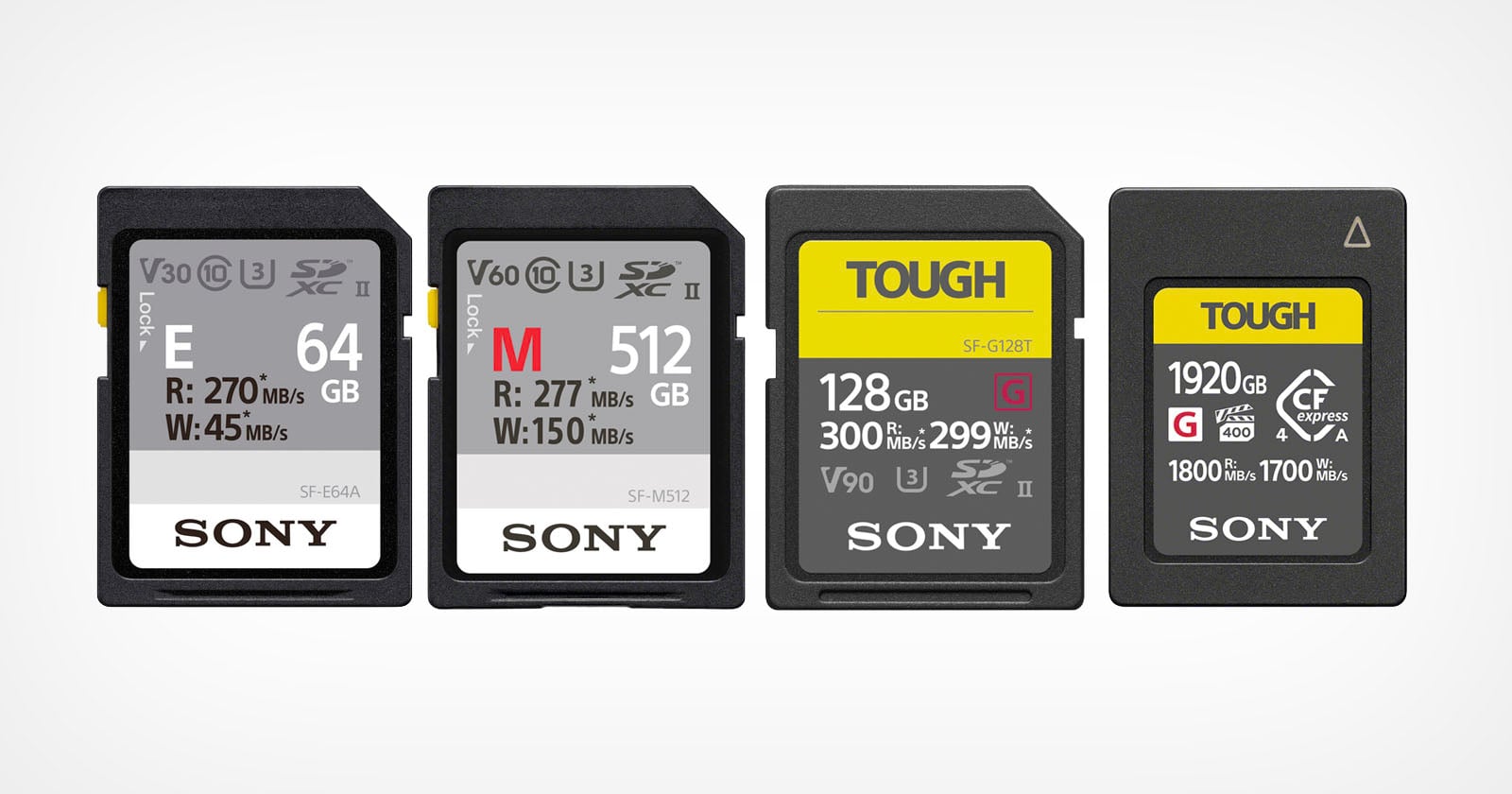
Glad I’m stocked on memory cards that should last me for a while.
There is, however, a bigger problem that’s not addressed - manufacturers seemingly only playing nice to big corporations while screwing the end customer.
It’s mask off time for capitalism. Business to person sales are no longer lucrative. All the money is in company to company now. See AI companies buying out entire present and future stock of PC parts until 2030. Regular people are no longer needed in this form of society. That’s why the market goes up while job numbers and employment go down. The economy can now support itself without anyone else.
Well eventually someone has to consume something for all of this to make sense, no?
Also isn’t this more the result of unhinged capitalism without any real workers pushback?
That sounds like some future Quarter’s problem
Nope. This can keep going on. Big businesses with all the capital will continue doing trade exclusively with other big businesses and government. They don’t need our money anymore. And it’s not like we’re really going to have any trivial amounts of money anyways.
And what does that money represent anymore at that point?
Seems too many have forgotten that its the peasant’s labor that gives money any value.
Money doesn’t produce anything.
What’s the value of a dollar if it can’t buy you bread?
They don’t need our money anymore because they’ve already taken so much of our money.
Its the only place left to get huge sums of money, we’re in the end game of capitalism
Manufacturers only have a limited capacity of production and want to make money. It’s a much better business to sell all your production’s capability for a few months to one customer for a fixed price, instead of selling to thousands of small customers for a highly volatile price. In the worst case you produce stuff, you can’t sell or have to sell at a loss. A factory standing still and not producing is also expensive.
A factory with all machines running, all people working, all product selling at a good price is the ideal state for a manufacturer to be in.
Big customers bring stability and predictable profits.
Production capacity for in demand products will increase over time. Likely these same manufacturers‘ profits will be invested in more production capacity, optimizations, cost savings, etc.
In a few years this will result in cheaper and available consumer products.
General purpose computers have been fast enough and had enough memory for a decade now. I bought a quad core (8 threads) laptop with 16 GB of RAM and a 1 TB SSD, 2 GB VRAM twelve years ago. Around the same time I built a NAS with an HP Gen8 microserver, also with 16 GB of RAM for ZFS. That one I recently upgraded with a better CPU for 20 €. Both of these machines still perform really well for most tasks. I haven’t upgraded my phone in 5 years, and my tablet in 8 years. These start to show their age because of the small amount of RAM built in. Last week I bought high end EIZO monitors from 8 years ago for 50 €. These are fine!
Ask yourself, are you even doing things that are limited by your hardware? If you are limited by hardware, could buying a last generation high end machine fill your needs? If you need vast amounts of computing power, renting cloud computing might be a solution as well.
If you actually make serious money with your work computer, then paying 8k for a machine will pay for itself over a few months.
A lot of people seem to think
I’mwe’re crazy for not getting a new phone every year or two. Previous one lasted 7 years, this one is at a bit over 5 years… It’s fine.True enough, my previous phone I kept until my banking app stopped working (my very, very old version of android was no longer supported) and my current phone is from 2019. I don’t think people need new phones/tablets/computers every year.
However… eventually I’m going to be needing a new computer. My desktop is about 6 years old now. And if it broke down right now, I don’t even know if I could afford to build a new one, unless I build one that’s worse than the one I currently own - and probably way more expensive than it was years ago (the RAM price alone is insane already).
And my phone won’t last another 6 years either. Although, who knows, it might. It seems indestructible so far, lol.
I’ve been dreading the new computer as well. I built the original incarnation of my current one in … holy shit, late 2013. I was thinking 2016 but I just looked up the order and it was 2013. I did it pretty damn “top of the line” because I wanted it to last ages. I have occasionally upgraded or replaced drives, GPU, RAM, power supply, but I’m still on the original board+CPU.
It’s still great… running Linux and occasionally gaming.
Wow, yours is a bit older than mine. Hopefully mine will keep functioning that long as well! I don’t honestly think it’ll break down any day now, but you never know. Things are known to happen, and when they do happen it’s always at the most inconvenient of times! Also, my computer is very heavily used, every day. Lots of games too.
I was surprised about my phone. I don’t even know how many times I dropped it already and the battery is still good enough to survive an entire day. Truly, I dread getting a new one. I always hate having to figure out the settings, downloading and installing every thing, and configuring the thing exactly the way I want to. If it were up to me I’d keep using the same one forever, but I doubt even my stubborn phone will outlast me. ;)
Sure, but we also don’t need more chatbot data centers to flood everything with more slop
General purpose computers have been fast enough and had enough memory for a decade now. I bought a quad core (8 threads) laptop with 16 GB of RAM and a 1 TB SSD, 2 GB VRAM twelve years ago. Around the same time I built a NAS with an HP Gen8 microserver, also with 16 GB of RAM for ZFS. That one I recently upgraded with a better CPU for 20 €. Both of these machines still perform really well for most tasks. I haven’t upgraded my phone in 5 years, and my tablet in 8 years. These start to show their age because of the small amount of RAM built in. Last week I bought high end EIZO monitors from 8 years ago for 50 €. These are fine!
Ask yourself, are you even doing things that are limited by your hardware? If you are limited by hardware, could buying a last generation high end machine fill your needs? If you need vast amounts of computing power, renting cloud computing might be a solution as well.
Yeah, I generally agree with your points. I dislike the push to planned obsolescence with everything. I’m also trying to maximise the life out of things I have and I buy a little less often even if under normal market conditions I can afford new things whenever I want.
I’m a hobbyist photographer (so almost everything I throw at the hobby is out of pocket) and recently made a jump to higher megapixel cameras (the megapixel increase wasn’t a requirement, more of a side effect). I have a pretty adequate AM4 PC, but suddenly the 32 gigs of RAM that it has don’t quite cut it. Could’ve maybe bought 64 back then, but opted not to. It’s still a workable situation, just not ideal. Had to replace a dead SSD recently (the Phison controller ordeal), swallowed the increased prices on these as well (because the old one was “luckily” just a few months out of warranty). As for the RAM, before the price boom I could’ve gotten a decent 64 or even a 96 GiB DDR5 kit for 500-ish EUR (to add to a new CPU and mobo) - and now both cost 1500+. Upgrading the existing also wouldn’t be exactly easy because when I built it I hunted a very specific combination of frequency and timings - just buying anything would cost as much as it did when it was brand new. Should’ve jumped to AM5 last year, I could’ve even sold the current things at a profit now, but who would’ve known… At this point it’s a market crisis after another market crisis - maybe we should buy and never look back at the prices the next day.
I work in a photostore, and the prices for fast sd-cards are getting ridiculous. Every time I scan one in the cash register I am almost scared of telling them the price.
I can’t imagine this is good for consumers.
Dw guys, you can all just sit at home and watch as your world is scrapped for parts. Just… Keep protesting, I’m sure your gov will start listening to you any second now. Ah it’s just memory cards, why get into a stink about the ramifications of that…
Imagine how expensive they would price the vita memory card if it came out right now 🤣
thumb drives don’t need no ssd. backup my mp3 collection and give to friends for safekeeping. $5/32gig
- due to move to the cloud
Imagine if they were this clever during the crypto boom…
As in, they’re gonna stop making redundant bullshit proprietary memory cards in formats no one else uses?
Great. Glad to hear it. Good riddance. Don’t let the casket lid hit you on your way out.
How are SD Cards proprietary?
This affects SD cards, which are extremely common and supported by open source operating systems. This affects Compact Flash cards, which use the same protocol as PATA hard drives, just a different connector.