

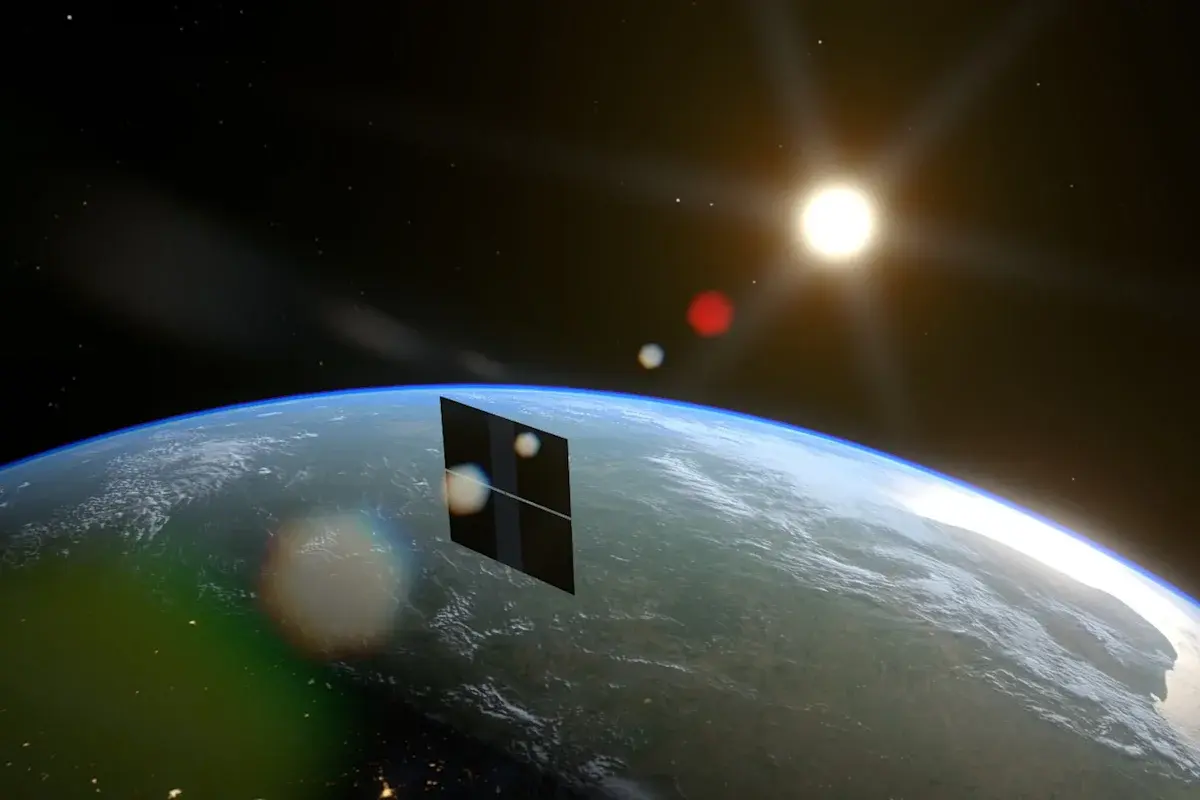
I had a conversation with a colleague of mine about this. He believed that Musk’s decision to merge xAI and SpaceX was truly because of the potential of datacenters in space. I was unable to convince him that the logistics of this would be a nightmare and that this was just a way to make the Twitter buyout SpaceX’s problem.
People that deal in computers think reality works like computers: just upgrade your drivers and download the reality you want.
It’s the Elon’s believe actually.
Yea honestly, orbital data centers are the dumbest shit I’ve heard during this bubble, and a huge indication of peak bubble hype.
The bubble is like this at this point:

LOL LOL you CANNOT cool something like that in space. The entire concept is flawed.
It’s such a hilariously dumb idea I hope the tech bros sink millions into it.
Lets make a data center we can’t maintain, upgrade or access for any practical reason. Waiting for the suggestions to put them in geostationary orbits so that way their latency is even higher but going to struggle staying powered when in Earth’s shadow. Or get put in the Earth-Sun L1 so they always have solar power but now have to have significant more radiators on top of even MORE latency beyond beyond the moon’s orbit.
I’d rather we just seize the wealth they have stolen from the working people of the world and use it for something we actually need. Like healthcare, or reducing carbon emissions.
But futurism bro science idiots see all space adventurism as equal. They see billionaires wasting resources on ideas hashed out with an LLM during a ketamine bender as just as worthwhile and scientifically valid as a probe to deep space or a rover to Mars.
Eliminating heat is like one of the hardest space problems 🦙
Are there actually people who think this is a good idea that are not in a position to make money off it?
Yes. All the retail investors in SpaceX that will be left to hold the bag.
My aunt and uncle are Elon fans (yes, even after his fucking Nazi salute) and have said orbital data centers are a good idea.
They have money, and my uncle is usually pretty smart, so I’m not sure what the fuck is happening.
I know what’s happening! Your aunt and uncle are racist dumbasses.
I don’t know you, and I certainly don’t know your aunt and uncle, but I would generally assume in Nazi situations that “even after” probably means “particularly after” even if they don’t admit it.
It’s technically possible that all the starlink satellites have some arm socs. But the case only makes economic sense if the demand for compute outstrips zoning permit for data centers.
If you sell rockets and satellites, then data centers in space sound like a perfect idea to increase demand with other people’s money.
I skimmed the title for a sec and thought “what’s wrong with orbital stations?” before realizing the utter stupidity that graced my vision.
Right?! The particular rendition show is pretty remarkable. Like I’d question it as a small one off game asset
Seems to me that maintenance would be significant.
Maybe but also maybe they would hire my uncle and then he could go to space which would be pretty cool.
Just billionaire psychosis like where ai got to where it is to begin with. Obviously they’re all visionaries leading the world to a better place…
Do we have a way to transfer heat into rock, because I’m thinking lunar data centers.
what is metal if not just concentrated bits of specific rock?
🤘
At medium earth orbit the minimum delay will be about 67ms (250 ms to 600+ ms for geostationary orbits) for LEO it is 25-50 ms. The average ground network ping on a good day is 1ms-20ms.
I think most of the internet will still be on Earth.
You wouldn’t be communicating to the data center?
don’t need to think much about this crackpot idea.
where would the heat dissipate? that just ends this topic.
Via radiation into space. All you need is a radiator, the weight of a battleship (or worse). Yes, the idea is crazy.
Around or less than twice the size of the ISS radiator.
That gives you a heat rejection capacity of less than 140 kW (mind you, that is total heat rejection, incl. heat from the sun, support systems etc., only a part of that can be used to cool servers) So you settle for laughably low compute to keep radiator size somewhat reasonable, yet still massive and heavy.
The ISS is rated for 84kw but is run max at 70kw, probably for margin of error and whatnot since its for human saftey, which these will not be. They can also
probablyrun hotter, (edit reducing the size).The compute is 125kw avg per dish. 150 peak.
You do need margins not just for humans.
Building something the size of an (unmanned) space station for a single server rack, yes, it makes no sense. The energy needed to lift all that stuff into orbit, the comically inefficient cooling and never mind the issues of impact damage and radiation and inability to do any service (without huge effort) if things go wrong, all make this a pretty irrational idea.
Just put that server rack in Iceland with geothermal power and closed loop heat pump. But then the tech oligarchs would have to comply with laws and that is probably the reason they want it up in space. There surely is no technical reason for it.
Data / hardware sovereignty is a real thing, you can’t put all your data centers in another county, but building them in Texas vs Vermont/Alaska or elsewhere is stupid.
Ignoring all of the disadvantages of datacenters in space, what are any of the advantages?
Shit-tons of profit, if you happen to own a company that specializes in rocket launches.
Potentially greater power collection for use since solar arrays dont need to be built with the same space and enviromental constraints.
Potentially already in the data path for a lot of communications with satilites being capable of both last mile and backhaul communication.
Archtecture could take advantage of all three dimensions better again because of the extra space and different enviromental constraints (the big one being gravity). This is truer the more of it could be consteucted in microgravity.
Physical security. Its pretty hard for someone to sneak in.
Further failure domain segmentaion. I.e. hurricanes, earth quakes, etc not saying space is safe (good God not saying that!) but if you have a DC in florida, California, and above the earths mesosphere the likely hood that a disaster effects all three is pretty slim.
Closer data transit for interplantery or lunar communication.
Ignoring the costs and new hurdles of the enviroment this is what im tracking.
Further failure domain segmentaion.
If we add unstable governments or government interference to that list of possible disasters, it starts to make a little sense.
Harder for desperate people to damage.
The light and noise pollution no one wants near them are offloaded to space?
At minimum how would the heat be managed? Also as someone else said, just getting the material from the earth into orbit is currently possible but why?
An average PC with 8GB of RAM will have around 4 bit-flips per year because of cosmic rays. When you remove the wonderful protective atmosphere that number is so greatly increased that they have to use older chips, encased in a shield for any computer system that is launched into space. Explain to me how you are supposed to have stability with 100 000 5nm process chips constantly be hit by cosmic rays? The answer is a shitload of lead or steel or concrete. It is fucking unrealistic to send that much shielding material into orbit. Option B is getting the equivalent compute with 50nm process space hardened chips into orbit, which is also unrealistic because of the shear amount of chips required to have a useful data center.
Anyone who immediately does not shut down the idea of orbital data centers should not be in the field of tech, and especially should not be the Csuite of a tech company. I can’t belive anyone even humors the idea, it’s a fucking joke.
The linked video by Real Engineering does some back of the napkin math and yeah… the numbers are so off anything remotely feasible, it’s hilarious.
Dumping heat is a real pain in space because you can’t use convection. Everything has to use big radiators and cool off radiatively. Then when it is exposed to the sun it will be hit by the full force of the sun’s heat, then when it is in the earth’s shadow it will rapidly cool.
They are in a sun synchronous orbit and the radiators will be positioned for the least contact while the solar panels will be the most.
A big radiator. Yes they know how to do it, they already do it at a smaller scale with starlink. No its not as big as people seem to think (but it is big). The solar panels are bigger at least 2-3x, maybe more.
Also the mass to orbit / size for this does not work without starship working.
Apparently for an average data center youd need bewtwen 100,000 to 500,000 meters squared of radiator area
These dishes only need a radiator < 2 times the size of the ISS radiators if they were using the radiators on the ISS. They’re only 125kw avg, 150kw peak and the ISS radiators are rated 84kw.
I’m sure there’s been advancements in radiating heat efficiently in space as well.
Cumulatively it’ll be a lot, but the solar panels will be even more. They’re way bigger than the radiators.
A dara center is more than 100Kw.
You’re right, its going to be 10s of thousands of these smaller 125kW avg dishes, but they only need to solve the problem at the scale of 150kw peak.