

27·
22 hours agoUsing security as a convenient tool to sideline foreign competition is a slippery slope, especially from companies that built their own success on open research.

Hi! 👋 I’m Gerrit and in love with the Internet since 1994. 💞 Media ▹ Communication 👨🔬 Entrepreneur & Consultant at eicker® [iCare] ⏻ Reinschauen: eicker.TV 📲 Get in touch! 📇🇩🇪🇬🇧 #Fedizen #AI #Tech #Media #Sovereignty
Using security as a convenient tool to sideline foreign competition is a slippery slope, especially from companies that built their own success on open research.
Turns out the biggest miracle wasn’t multiplying loaves, it was making authentication disappear. An IDOR this basic on an app handling personal data is embarrassing. 🙈
The irony is that platforms spent years making anonymity optional, then built engagement systems that rewarded the worst actors anyway. Now the proposed fix is more identity, more biometric data and more addictive UX.
They didn’t short rockets: They shorted Elon Musk’s promise machine. For years he’s sold investors a never ending stream of revolutionary breakthroughs that were always just around the corner. Eventually reality catches up. Even the world’s best engineers can’t justify a valuation built on perpetual hype instead of consistently delivered results.
More and fresh is better.
OpenAI is a good reminder that mission statements and business incentives don’t always stay aligned. That said, I’d judge DeepSeek less by the rhetoric and more by what they actually release. Hype is cheap: open weights, reproducible results and useful tools are much harder to fake.
This. The frontier race is about building the smartest generalist, but most companies don’t need that. They need a specialist tuned to their workflows. Narrower scope means smaller models, lower costs, faster inference and often better results. General models become the foundation, not the finished product. It’s still all to play for! 💪😎✌️
That’s either incredibly idealistic or a very smart strategy: Open models grow ecosystems faster than walled gardens, but compute still decides who gets to play at the highest level. If AGI really becomes shared infrastructure, the moat shifts from models to chips, data and execution.
You’re mixing two separate issues: A sandbox escape is evidence the containment failed, not proof the model permanently learned from stolen data. If OpenAI later trained on exfiltrated material that would be a serious allegation, but that requires evidence. Otherwise it’s fair to criticise the security failure without assuming facts that have not been shown.
That’s assuming security is something you solve once. It isn’t. Every security system is built by humans, tested by humans, and eventually bypassed by humans. We don’t abandon operating systems because vulnerabilities exist: we patch them, improve them, and layer defenses. AI changes the pace, not the fundamental nature of cybersecurity.
It was just as you’d expect: This isn’t an AI problem! It’s the same human problem we’ve always had: misconfigurations, weak security, and avoidable mistakes. AI just punishes those errors faster and more effectively than traditional software ever could. Anyone who continues to rest will be severely punished.
I‘ve been on identi.ca back in 2008. What about you? 🤷
Unlike you, I always speak openly under my own name. Unlike you, I don’t run an army of sock puppets. Unlike you, I’ve been active on the Web and Fediverse for decades. Unlike you, I’m not a block warden. Go and troll somewhere else. Bye! 👋
Paying a ransom doesn’t buy trust: It buys hope from people who have already proven they’re willing to extort you! If criminals learn that victims pay, asking for a second ransom isn’t a betrayal of the deal. It’s just the next logical business decision. 🤷
Absolutely! 💯
Are you still hoping that he’ll learn at some point?
At least in this case, they actually know what they’re talking about. ✅
Funny how AI suddenly becomes sacred intellectual property only when someone else catches up. If the evidence is real, enforce the rules. If it is not, this risks looking less like protecting innovation and more like protecting market leaders from uncomfortable competition.




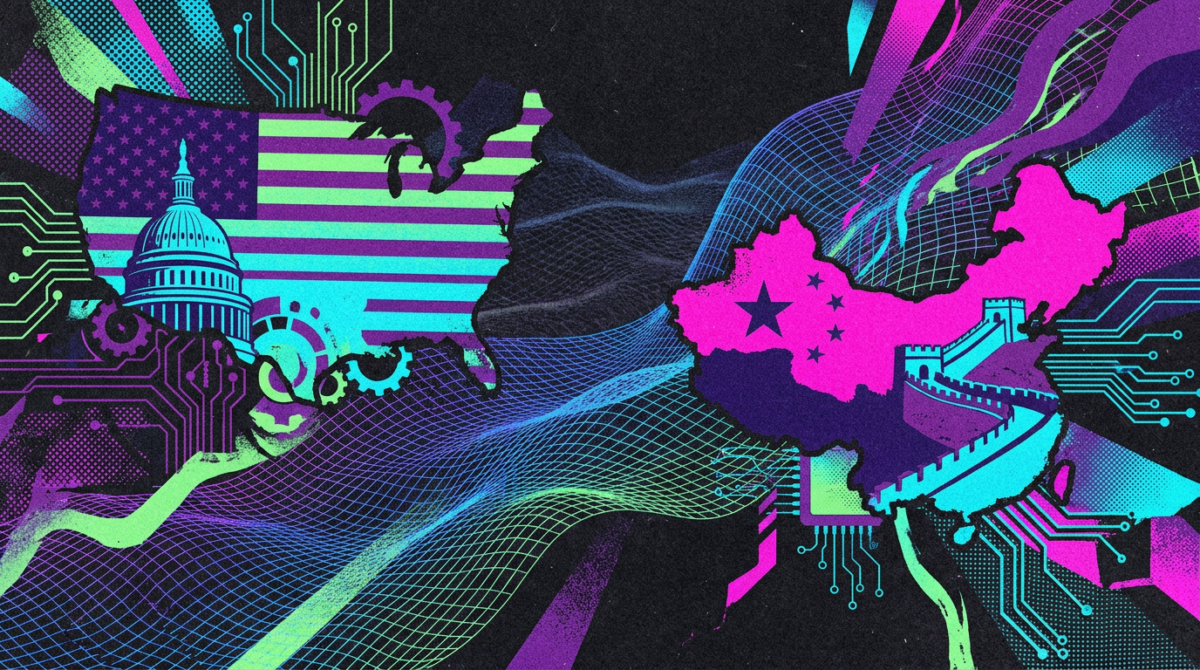
That’s not necessary: as the Open Weight AI models from the US are rather poor, nobody wants them anyway. 🤷