

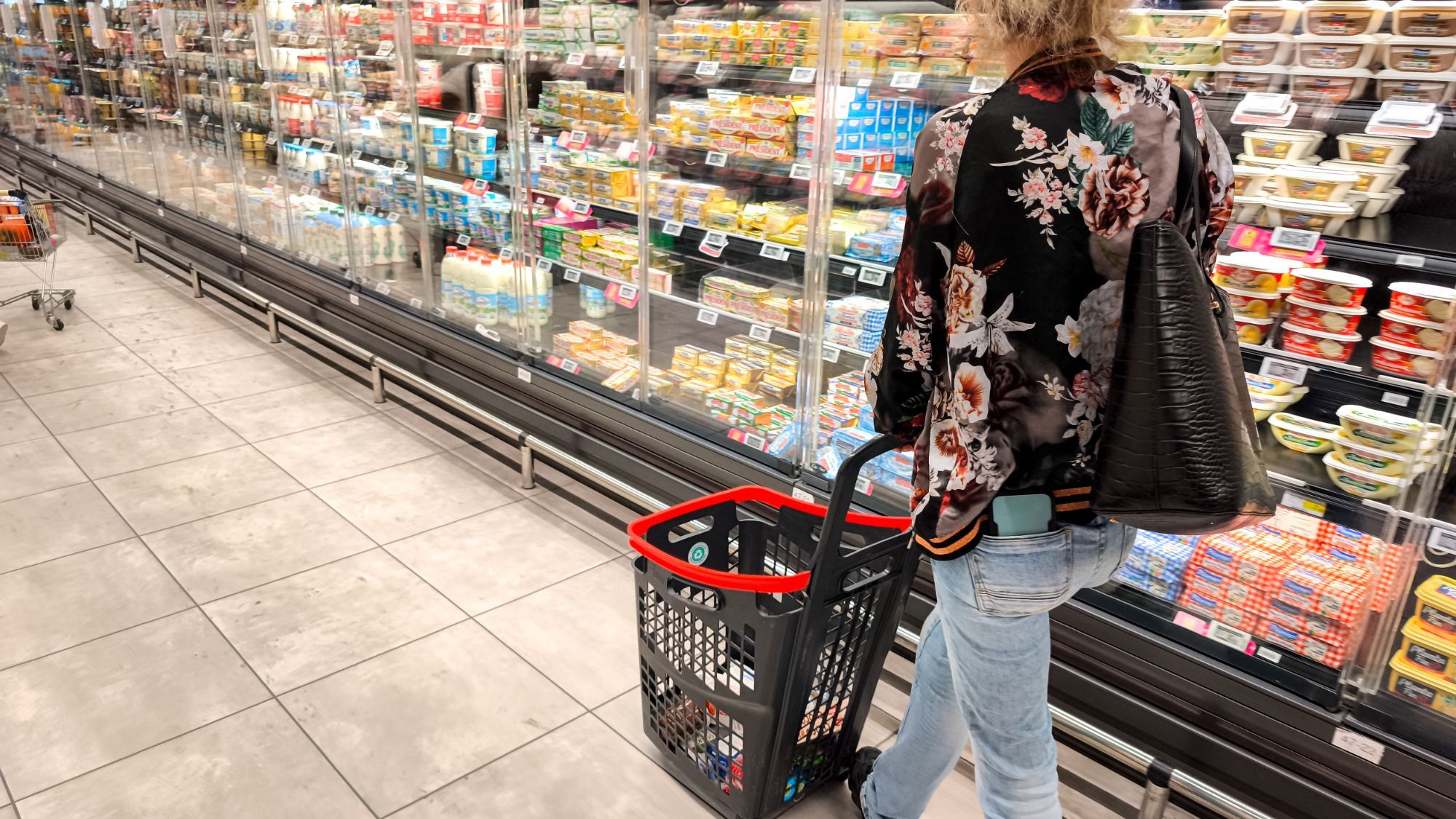
Somebody learns the term “single point of failure” now…
I wonder how much money was saved by having someone manage the freezer section, or how much money was earned by not having an empty fridge.
The management quarterly meeting PowerPoint presentation says x3 more yachts for us.
Attacking a countries food supply and food reserves really seems like a act of war.
The term “hackers” really downplays the severity of these kinds of cyber attacks IMO. It makes it kind of sound like a teenager in a basement somewhere, as opposed to some foreign state cyber warfare group or something along those lines.
Also it’s madness that systems like these are connected directly to the internet without read-only permissions implemented. Controls should only be accessible locally on some kind of airgap or local seperate VLAN.
The disconnect between how systems “should” be and how they actually are is disappointingly enormous.
Retailers are surprisingly enough just like consumers and want things to “just work” without caring about security.
And so they get Internet-connected fridges, and it’s all fine, until the very moment it isn’t.
I hope this is a learning experience and they beef-up their systems.
And it’s not just retailers. I’ve seen this just about everywhere, especially in toxic workplaces.
Please stop with the acts of war or terrorism BS. The article also mentions “in-store pricing powered by electronic shelf labels” so lets not ignore this is about multi-billion companies trying to suck every penny out of our pocket. If these companies design and manufacture and buy stupid hardware that is susceptible to such hacking, they really deserve it. I mean they really do.
Second, this is a good thing. Systems will be hardened now. You think there would be any other fucking way they would upgrade their security unless something like this happens? Beatings will continue until security improves. This is why even chaotic hackers that cause damage and inconvenience are ultimately a positive force on our IT infrastructure. Think of it as an ecosystem and evolutionary pressure. Free marketplace of security models.
Agreed. It’s also a massive jump to call a grocery chain’s fridges a countries ‘food reserves’
Also it’s madness that systems like these are connected directly to the internet without read-only permissions implemented.
Water systems in the US are, too. And they have been hacked.
I’m sure the admins managing this infra did implement strict permissions… Separate vlans are safe until you find a vulnerability in the switch OS, or find a way to access the admins account.
The main plot of Ghost in the Shell 3. sigh
This is exactly what happened to the US Army about a month ago.
Why the fuck are all of your fridges controllable from the Internet? We didn’t have to build such a stupid, stupid society.
Because shops don’t want to run hardware on site, so they outsource the hosting of management and monitoring to the cheapest contractor. Unsurprisingly they don’t spend on security.
I think Samsung had some sort of failed update that killed their refrigerators as well, makes you wonder.
Morgan Freeman Narrating: It was in that moment, they realized the IoT was a very, very dangerous idea.
Remote monitoring 👍
Remote control 👎
David Attenborough butting in: “That’s when they should have realized it, but did not. A fatal mistake.”
Why the fuck does a refrigerator need to be on a network?
Speculation to your question, for monitoring and control.
For monitoring, log temperatures and send error message if it gets too high. Data could be used if any legal question come up about food spoilage.
For control, I’m guessing there’s times you want to shut it off or enable/disable defrost. Easier to do that at a computer than have controls that are either a pain inthe ass to get to, or too easy for some moron to mess with.
That being said, it should be on a local network and have no access to the internet. However a chain store would probably want the data sent to HQ, so the computer would need to be on the network.
What’s missing from this report is more detail on how exactly this attack went down. Did the attackers compromise supermarket networks and manipulate the fridges through lateral movement within the network; or were the fridges accessible from the open internet? If the latter is the case (and there’s a non-zero likelihood they were): why the fuck?
I assume because of the monitoring cloud-based IoT thing from Danfoss fridges were so comfortable to use. Ok, you don’t need it so often, but hey it’s a cool IoT feature.
They really put a “let everything rot” button in there?
Yes, they did. Keep the defrost button pressed.
I had a picture of the device since I was curious, but I spotted at Walmart, and some other stores, a Cellular/Wifi/BT gateway that was branded by some company providing facilities services. As far as I can tell, the device was intended to provide secure connectivity to some service provider. I found a similar device in the freezer section of another store.
I imagine that there is remote control/remote monitoring of all the freezers or other on-premise machinery (which, is a perfectly sound thing to do), but if the central provider doesn’t take security seriously, and stay on top of their systems operations, can easily be the target for any kind of attacks.
More practically, I suspect that everyone involved has insurance whose cost is much less than ongoing proactive security + maintenance of their systems, which is why these incidents don’t seem to instantly put these companies out of business.
Guess…
Being “smart” and connected to the internet is about to devalue a lot of manufactured goods that have no business being either one of the those things.
The executives that allowed the system to be built this way belong in prison for the value of the destroyed food. An engineer almost certainly told them this system needed better design and security and was told no by some cheap ass trying to preserve their executive bonus.
Nothing will ever change until these monsters have personal consequences.
Maybe they learned they need to air gap critical infrastructure, and leave the management to on-site humans who are paid well enough not to hold their inventory for ransom.
“Learn” hahahahaha
Did having centralized control and monitoring of coolers save a fake number of man-hours on a spreadsheet instead of paying a store employee already on the clock to check temperatures occasionally?
They’re going to keep doing it because the spreadsheet says the risk is worth saving those fictional man-hour costs.
They will calculate that they spend less on recovering from these cyberattacks than they would on paying staff fairly, and carry on.
2010s - We made everything smart, networked, and IOT!
2015-2025 - We need you to put your personal details into everything, everywhere, all the time!
2026-??? - We invented a machine that can hack everything on earth and steal all data for nefarious purposes.
Im surprised that the EU doesnt have a secuirty requirement for IT infrastructure in the food supply. Seems like an oversight
We do, but companies are given a billion years to implement that because The Economy ™️
The whole field is evolving, there is the EU Cyber Resiliency Act and some provisions for critical infrastructure.
Hacks and attacks like this will explode with AI.
AI is absolutely incredible at finding vectors for arbitrary code execution. It can jump from layer to layer to layer to find an exploit. I want all of my appliances from now on to be dumb and not connected to the internet.
I like physical media too.
Wouldn’t be surprised if we learned in a few months that this was done by state sponsored hackers.
Alright then, No more IoT refrigerators in my home.
Don’t worry. It is surely only a misbehaving LLM…